ServicesBank Statement Loans
Bank Statement Loans in Bartlett, TX
If you run your own business, your tax return can make a healthy income look thin. A bank statement loan measures what actually comes in. We review your deposits carefully, explain the tradeoffs plainly and size the loan to a payment you can carry.
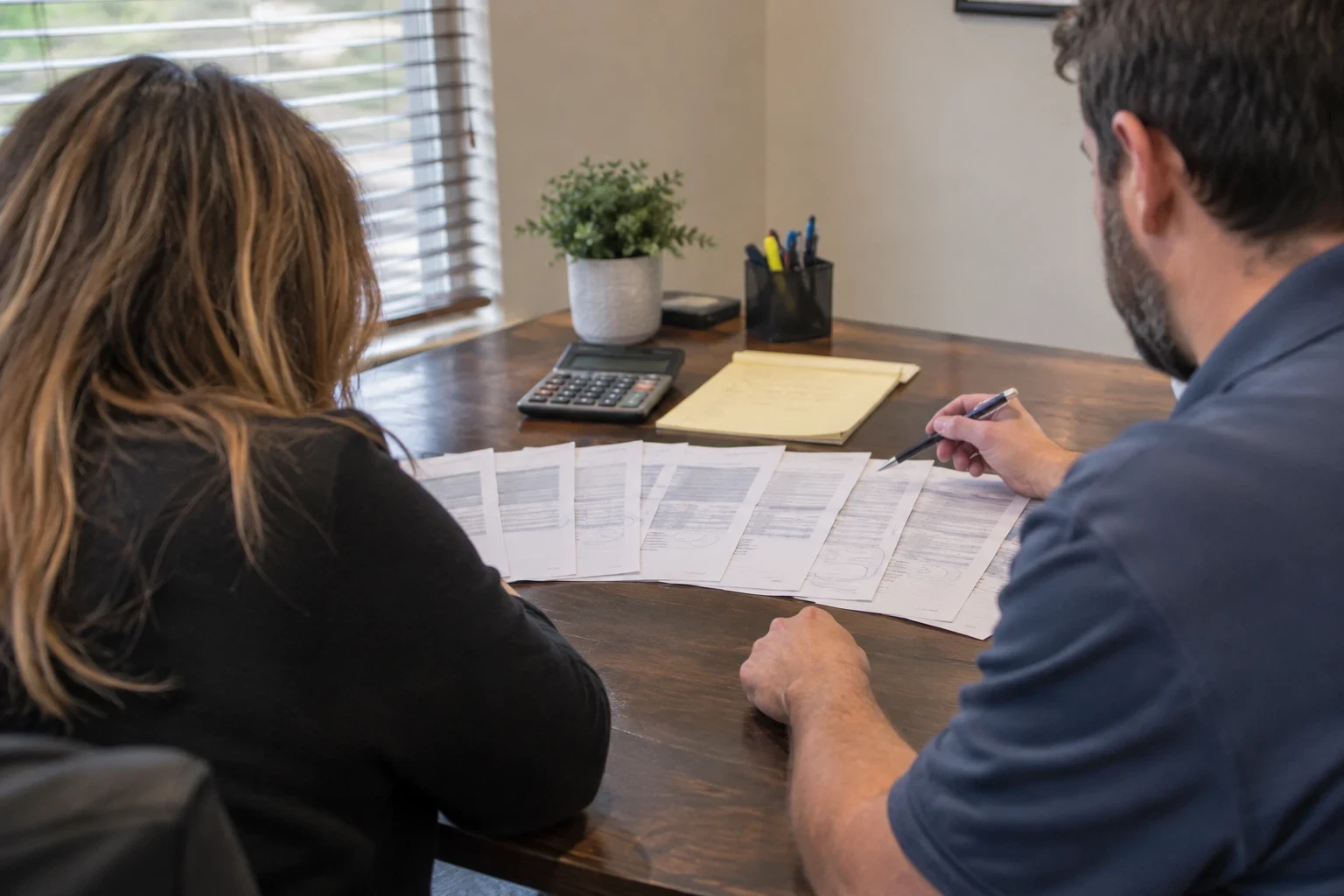
A home loan built around how self-employed people earn
Most lenders qualify borrowers from W-2s and two years of tax returns. That works for salaried people. For contractors, consultants, shop owners and gig workers, the deductions that lower a tax bill also lower the income a lender can count. A bank statement loan sets the returns aside and looks at 12 or 24 months of personal or business statements instead.
These are non-QM loans, meaning they sit outside the standard agency rules. That flexibility comes with a cost. Rates usually run higher than a conventional loan, and a larger down payment is common. Our first job is to tell you honestly whether this route makes sense, or whether a conventional loan or FHA loan would serve you better on paper you already have.
We treat the decision the way a careful builder treats a foundation. The point is a home loan you can keep paying through slow months, not the biggest number a program will allow.

What we handle for you
- 01
Deposit analysis
We go through each month of statements and separate true income from transfers between your own accounts, loan proceeds and refunds. Only qualifying deposits are counted, so there are no surprises at underwriting.
- 02
Expense factor review
Business statements are usually reduced by an expense ratio to reflect operating costs. If your real margins are better than the standard figure, we explain what documentation, such as a letter from your CPA, might support a more accurate number.
- 03
Personal or business statements
We help you choose which account set tells the clearer story. Some borrowers pay themselves cleanly into a personal account; others run everything through the business.
- 04
Payment stress check
Before we quote a loan amount, we look at what the payment does in your weakest income months. If the math only works in a good quarter, we say so.
- 05
Secure document handling
Bank statements show a lot about your life and your business. We ask only for what the file needs and walk you through how to send it safely.
Questions about Bank Statement Loans?
Call(254) 414-2623Signs a bank statement loan may fit
Your returns undersell your income
You write off vehicles, equipment and a home office, and the bottom line on your return is far below what you actually live on.
You were turned down elsewhere
A bank or online lender declined you for income, even though your accounts show steady money coming in every month.
Your business is newer
You have strong deposits but not two full years of filed returns showing the current level of earnings.
Income arrives unevenly
Seasonal work, project billing or commissions mean some months are big and others quiet. Averaging 12 or 24 months of deposits can reflect that more fairly than a single tax year.
The steps from first call to closing
- 1
An opening phone call
We go over your business, how you pay yourself and what you want to buy or refinance. You get a direct answer on whether this program is worth it, and your pre-qualification can begin on the same call.
- 2
Your statements and income figure
You send the statements we request. We work out your qualifying income, show which deposits we left out and why, and give you the loan range that results.
- 3
Quotes compared in writing
We set the rate, down payment and closing costs next to each other, along with a conventional option if you qualify for one. You choose with everything in view.
- 4
From application to the closing table
After you decide, we take the application, order the appraisal and handle underwriting questions as they arise. We meet at our office or by video, whichever fits your schedule, and go over each closing document before you sign.
What decides your rate and closing costs
These loans are priced by risk, so terms differ more between borrowers than on a typical home loan. Instead of giving you one number, we go through each factor in your quote. Once you see what changes the price, you can choose whether to adjust your plan before applying.
- How much you put down
- A bigger down payment reduces the lender's risk and tends to bring a better rate. You also start out with more equity.
- Your credit record
- A higher score unlocks better pricing. Late payments in the recent past or large card balances work against you.
- Money left in reserve
- Lenders look for several months of payments saved after closing. Solid reserves improve the terms and cover you if work slows down.
- What the property is and how you use it
- A primary residence is priced differently than a second home or an investment property, and certain property types bring extra requirements.
- 12 or 24 months of statements
- Using 12 months rather than 24 can push qualifying income up or down depending on how your earnings are trending, which changes the loan you can comfortably carry.
Common bank statement loan questions
Do I still have to file tax returns?
Yes, you file as you normally would. The lender just measures income from your bank statements rather than your return. Some programs want proof the business is operating, like a license or a letter from your CPA.
Could I move to a conventional loan down the road?
Many borrowers do. They buy with a bank statement loan, then refinance after two years of tax returns show the income a conventional lender looks for. We can map out that route at the beginning, along with any prepayment terms to keep in mind.
Do big one-time deposits count as income?
Generally not. Money from selling equipment, moving funds from savings or a loan payout is left out, and odd deposits may call for a brief written explanation. We point these out early so underwriting does not stall.
Will I need more money down than with other loans?
Usually, compared with an FHA loan or a conventional loan on a strong file. How much depends on your credit, the property type and the loan amount. We lay out the choices so you can weigh putting more down against keeping cash in the business.
Can this loan buy a rental property?
Some programs permit investment properties, usually on stricter terms. If you plan to buy a rental in Bartlett, Temple or Georgetown, we can line this option up against other investor loans before you decide.

Find out what your deposits can support
Have a rough idea of your monthly deposits and how you pay yourself, and we will take it from there. You will hear an honest read on whether this loan fits before any paperwork begins.